An urban heat island is a city, or part of one, that is warmer than the land around it. The US Environmental Protection Agency says daytime temperatures in urban areas are about 1-7F (0.6-3.9C) higher than in outlying areas, and night-time temperatures about 2-5F (1.1-2.8C) higher.
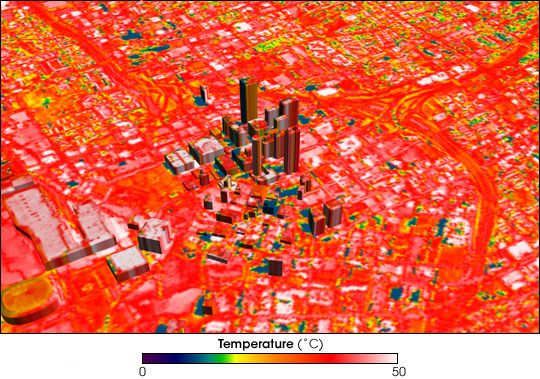
The EPA distinguishes two kinds. A surface heat island is the extra heat of roofs, roads and pavements, strongest in sunshine; a conventional roof can be as much as 66F (about 37C) hotter than the air around it. An atmospheric, or canopy-layer, heat island is the warmer air between the ground and the rooftops, which varies much less.
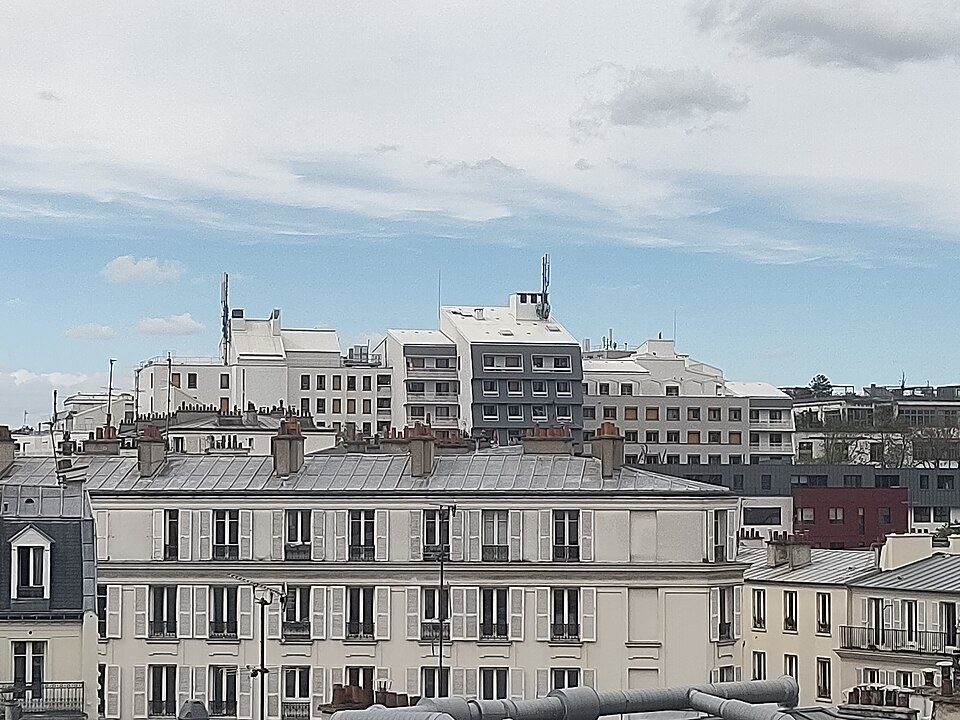
The EPA lists five causes. Cities have fewer trees, plants and water bodies, which cool the air through shade and evaporation. Their materials reflect less sunlight and store more heat. Narrow streets between tall buildings form "urban canyons" that block wind and slow the loss of heat at night. Vehicles, air conditioners and industry add heat of their own. And calm, clear weather makes heat islands stronger, while wind and cloud weaken them.
The idea is two centuries old. Luke Howard, a London pharmacist best known for naming the clouds, published The Climate of London in three volumes between 1818 and 1833. Comparing city readings with his own outside it, he found London warmer by an average of 0.88C, with the gap greatest at night, and noted the effect of the city's smoke.
Size and climate matter. A 2019 study in Nature led from ETH Zurich found that the summer gap between city and country depends on rainfall and city size, and that greenery and reflective surfaces work best in dry regions. A 2021 study in PNAS found urban exposure to extreme heat rose by nearly 200% between 1983 and 2016 across 13,115 cities, affecting 1.7 billion people. A PNAS study in February projected that 81% of 104 tropical and subtropical cities will warm faster than their surroundings at 2C of global warming, and Mongabay India reported that Indian cities face an extra 45% rise relative to the countryside.
Heat is also unequal. Across the 175 largest US urban areas, people of colour experience an average daytime surface heat island of 2.77C, against 1.47C for white residents, according to a 2021 Nature Communications study. The World Health Organization puts heat deaths at about 489,000 a year worldwide.
Sources: US EPA - US EPA (types and causes) - Royal Society - Manoli et al., Nature 2019 - Tuholske et al., PNAS 2021 - Berk et al., PNAS 2026 - Mongabay India - Hsu et al., Nat. Commun. 2021 - WHO
For Discussion
1. Which streets near you are hottest on a summer afternoon, and what are they made of? 2. Should cities judge heat plans by temperatures lowered or by deaths avoided?