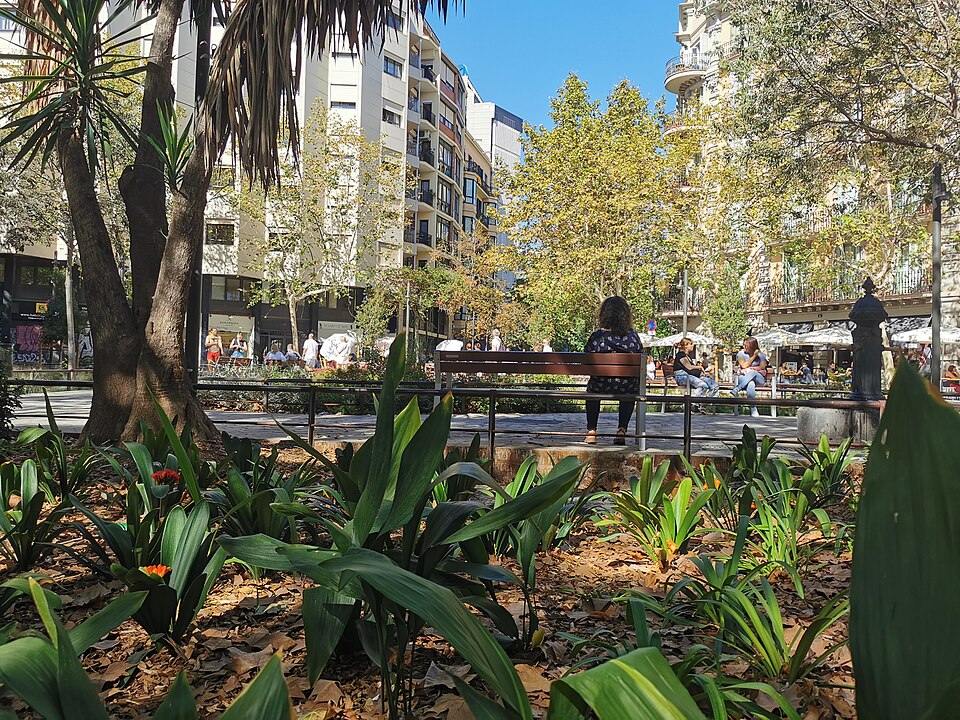
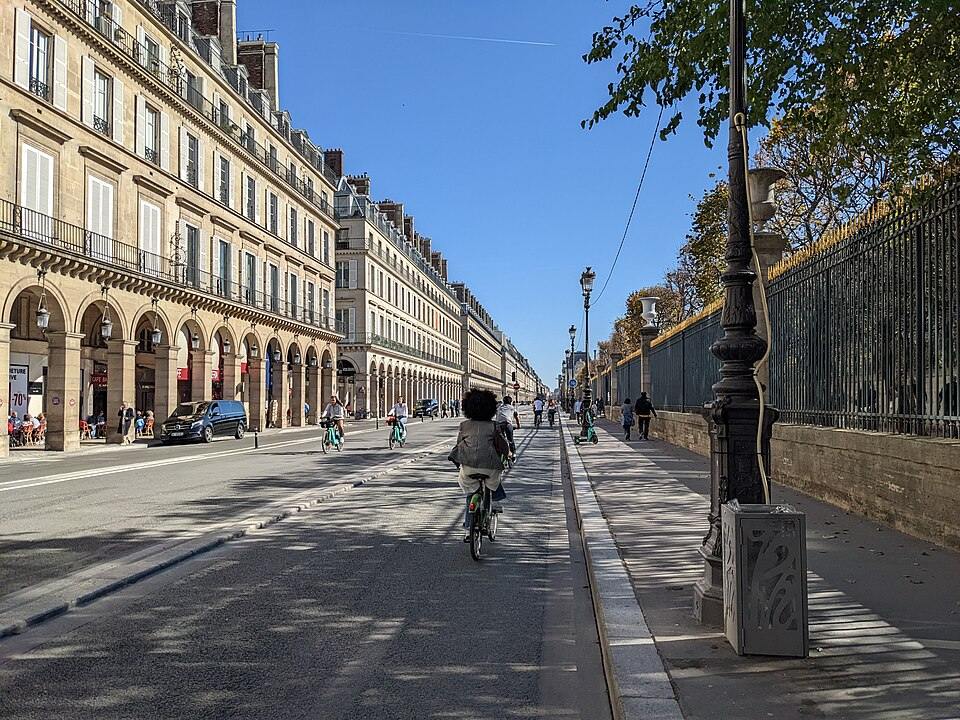
In a 15-minute city, most of what a resident needs in a week - a job, a home, food, a doctor, a school, culture and somewhere to unwind - should be reachable on foot or by bicycle within about a quarter of an hour. Carlos Moreno, a Franco-Colombian scientist and professor at IAE Paris (Paris 1 Pantheon-Sorbonne), set out the concept in 2015-16. It builds on the neighbourhood unit and decades of mixed-use planning, but Moreno added a measurable test: a neighbourhood is judged by travel time, rather than by distance or land-use zoning.
Moreno's framework rests on four components, usually listed as density, proximity, diversity and ubiquity, with digitalisation sometimes given as the fourth. Density means enough people to support local services. Proximity is measured in both time and distance. Diversity means mixed uses and mixed communities. Ubiquity, or digitalisation, means reaching services and work without travelling at all. He received the Obel Award for the concept in 2021.
The idea gained wide attention when Paris Mayor Anne Hidalgo made the "ville du quart d'heure" the centre of her February 2020 re-election campaign; she won in June 2020 with 48.5% of the vote. Interest grew during the pandemic, when lockdowns showed how much of daily life depended on what lay within walking distance of home.
The concept has also drawn opposition. In Oxford, the city council endorsed the 15-minute idea in its Local Plan 2040, while the county council separately planned camera-enforced traffic filters on six roads. Conspiracy theorists merged the two into a "climate lockdown" story; about 2,000 people marched in February 2023, and both councils issued a joint statement rejecting the claims. In January 2026, the LSE Grantham Institute criticised a national newspaper for again conflating the two schemes.
Research on the concept is expanding. A 2024 Nature Cities paper by Bruno and colleagues set out a common framework for measuring 15-minute access across thousands of cities and found large inequalities both within and between them. The EU now funds research under a dedicated 15-minute City pathway in its Driving Urban Transitions call, open until November 17.
Sources: 15-minute city (reference) - Carlos Moreno - Euronews - Bloomberg CityLab - LSE Grantham